Quarterly Results – March 2026
Sources: HOTC Pedestrian Count, Marketview, Colliers. Not for Reproduction.
2026 is an important year for the city centre, with major infrastructure projects nearing completion, new businesses opening, and opportunities emerging.
The March quarter told a mixed story for the heart of Auckland. More people were out and about, helping to lift vibrancy, driven by seasonal increases in international tourism, the return of students, and a strong events calendar. The opening of the International Convention Centre and the 322-room Radisson RED hotel also added to the city centre’s growing appeal and economic potential.
At the same time, total spend declined in line with broader national trends, reflecting ongoing pressure on consumer and business confidence. Cost-of-living challenges, tighter financial conditions, and global uncertainty continue to weigh on spending behaviour.
The result is a clear gap between activity and spend. While foot traffic increased, spending remained restrained, particularly outside peak tourism and major event periods. Day-to-day spend stayed soft, with activity largely supported by visitors and events.
There were some encouraging signs, however. Retail vacancy fell to its lowest level since December 2020, pointing to renewed confidence in the city centre. This was reinforced by a steady stream of positive announcements for Queen Street, starting with the announcement of Faradays coming to 131 Queen Street in November 2025. In the first quarter of 2026, the grand dame Queens Arcade unveiled plans for a multi-million-dollar makeover, and French luxury house Cartier announced its New Zealand flagship on the golden mile. Several businesses also expanded, with Spacefor opening a third Britomart location and Crane Brothers enlarging their flagship store on High Street. Together these reflect growing momentum and excitement.
Looking ahead, the outlook remains positive. The major events pipeline continues to grow, and the long-awaited City Rail Link is expected to improve access and support further increases in foot traffic.
Foot traffic was up year-on-year
Sources: HOTC Pedestrian Count. Not for Reproduction.
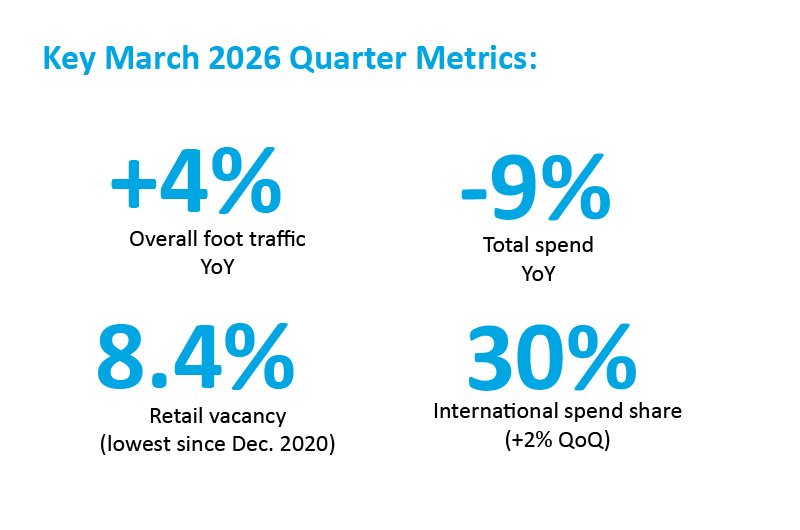
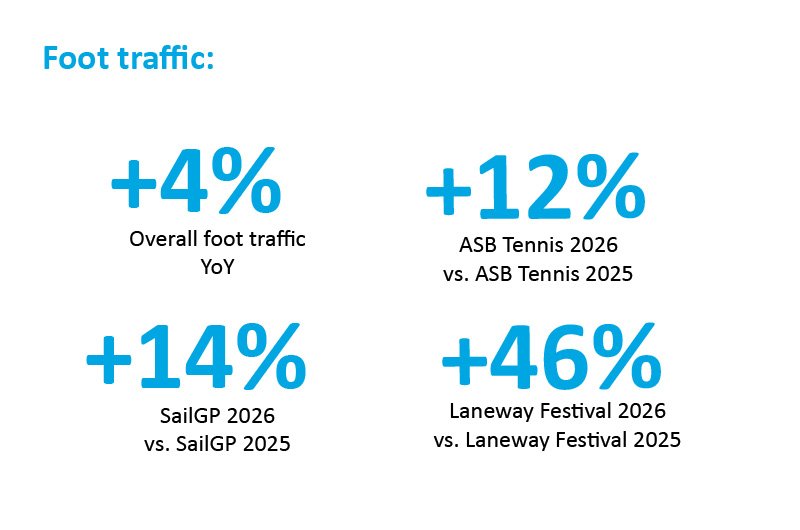
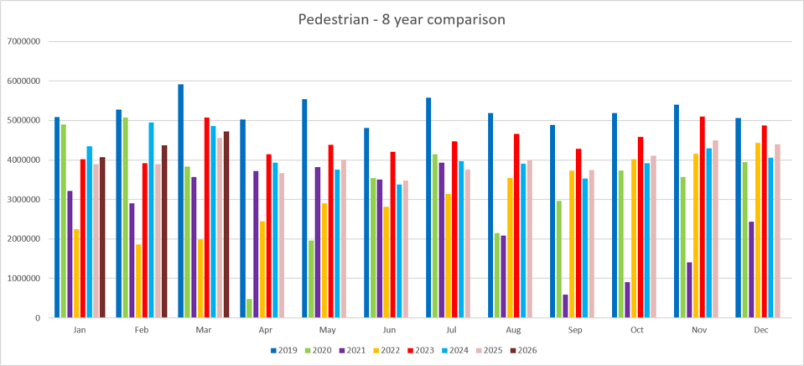
The March quarter typically brings a seasonal influx of people into the city centre. 2026 was no exception, and built on the growth seen in 2025, with foot traffic +4% year-on-year.
Events bought boosts to foot traffic, some spend
The long summer days and nights lent themselves to a packed events calendar, which played an important role in maintaining activity levels over the quarter. There were clear, short-term spikes in foot traffic and some spend, helping to support businesses when underlying demand was softer.
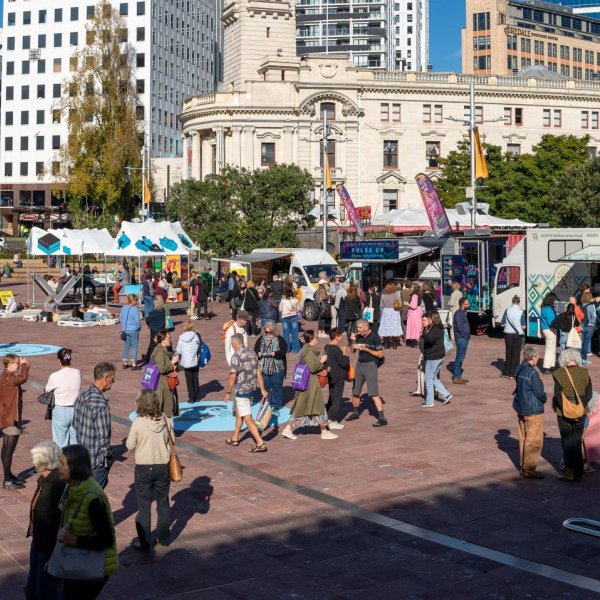
Annual events delivered strong uplifts compared to 2025. Foot traffic for the ASB Tennis tournament was +12%, and SailGP +14%. Laneway Festival was hosted at Western Springs, but the city centre benefited, with foot traffic +46% and +12% in café, restaurant and hospitality spend compared to Laneway 2025. This sector also benefited from one-off concert events; spend in café, restaurant and hospitality was +7% the night of Lorde’s concert at Spark Arena compared to the same time the previous week.
Seasonal moments and events added further momentum. The Jehovah’s Witness Conference in January had around 20,000 attendees. It helped to boost overall foot traffic in the city centre +2% compared to the previous week. Hotel Council Aotearoa projected an economic impact of more than $20 million for the Auckland region, including around 60,000 visitor nights and high hotel occupancy.
Lovers took to the streets on Valentine’s Day, with foot traffic +8% compared to 2025. Dining and drinks were the preferred dreamy date, with spend in café, restaurant and hospitality +3% on Valentine's Day 2025.
Source: HOTC Pedestrian Count. Not for Reproduction.
Inaugural cultural events and international students added to the vibrancy
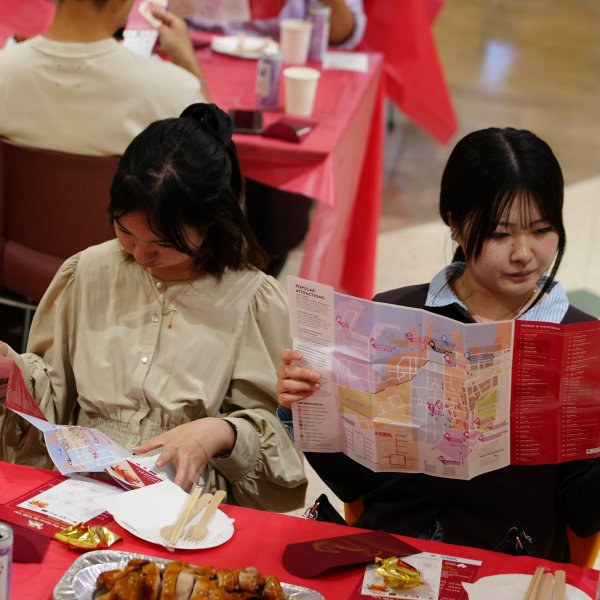
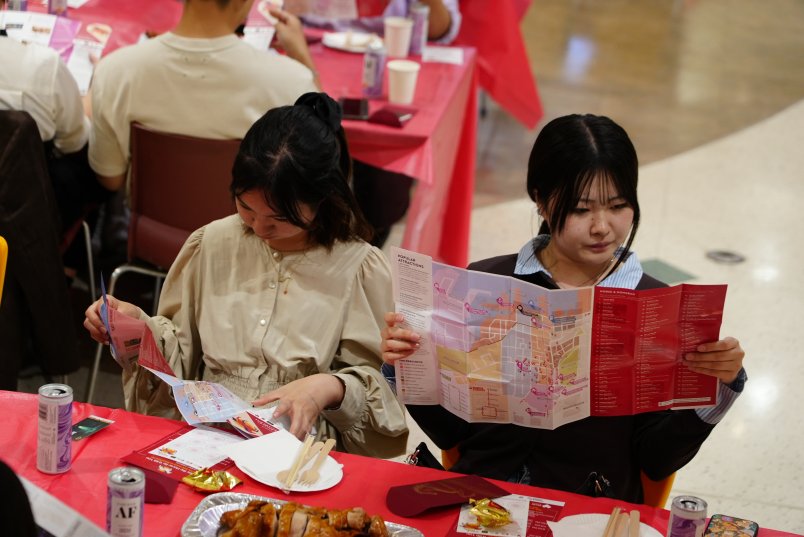
In February, the city centre celebrated the Lunar New Year – and Year of the Horse – with a programme of events and activations across the city centre. This year’s festivities aligned with the start of the academic year, and the perfect opportunity to welcome 15,000 international students into the heart of the city through our Horse & Hóngbāo campaign. It was designed to boost foot traffic and spend (particularly in the midtown area), highlight local businesses and create a vibrant welcome for new and returning students. The campaign included a hóngbāo-shaped map with exclusive deals, festive events and prize draws. 88 businesses took part, with 68% of participating businesses surveyed reporting a positive impact. “It helped us to boost our business and more students coming into the shop” reported one. The Student Welcome Dinner at Atrium on Elliott Food Hall was attended by 200 international students from the University of Auckland and AUT. Students were extremely positive about the experience, noting the quality of the food, entertainment, and the sense of belonging created during the event.
Student Welcome Dinner, Lunar New Year 2026
We also connected with the wider community as part of Lunar New Year, with the return of our walking tours with Chow Luck Club. Now in their third year, the series quickly sold out.
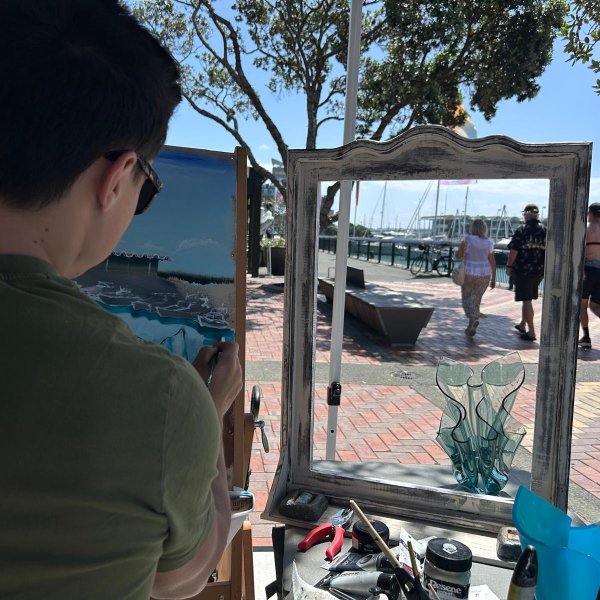
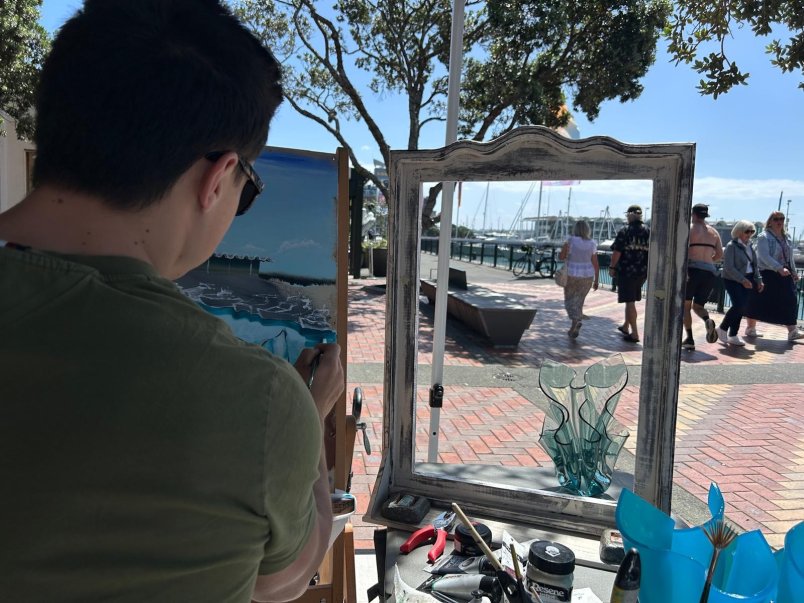
The inaugural Wharf to Wharf Live Art Trail, which we supported, brought a splash of colour to Auckland’s waterfront in the March quarter. More than 30 artists from Auckland and beyond painted live for three weekends from Silo Park to Queens Wharf. It was followed by an open studio at Silo 6 Gallery and an art auction. ~15,700 people attended Wharf to Wharf in total, with 14 artworks sold at the auction.
Wharf to Wharf 2026
Looking ahead, the events pipeline continues to build. The New Zealand International Convention Centre opened during the quarter and already has 120 events confirmed for 2026. Eden Park was also approved to host up to 22 concerts annually. Together, these developments are expected to support more consistent boosts to the city centre throughout the year.
Overall spend reflected broader national trends
Source: Marketview. Not for Reproduction.
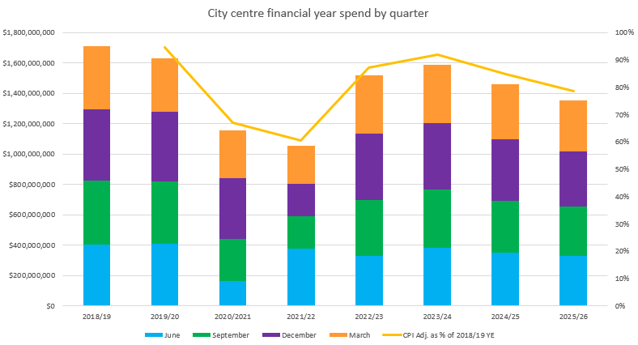
Spend in the city centre softened over the March quarter, reflecting national trends rather than a purely local slowdown. Changes aligned with falling confidence across New Zealand, especially late in the quarter. While the decline here was sharper than the wider Auckland region, both saw negative growth, pointing to broader economic pressures. Nationally, ANZ reported that consumer confidence dropped from 107.2 in January (the highest level since August 2021) to 91.3 in March, and business confidence fell from 74 in December (a 30-year high) to 33 by March.
The 2degrees Shaping Business Study was undertaken between 10 March and April 10, 2026. This is slightly outside of our reporting period, but its results were published at the time of writing. Now in its 7th year, 555 business decision-makers from around the country were surveyed.
In an interview with the New Zealand Herald, 2degrees CEO Mark Callander said the results showed that ….“the recovery post-COVID is no longer coming, so businesses are learning to survive amongst a little bit of chaos, a little bit of inflation a little bit of change and having to adapt accordingly…there’s been a mindset reset around adaptability.” However, he was quick to point out that the survey “wasn’t all doom and gloom”, with “1 in 5 saying their business is thriving…the highest since the survey started” and 61% of businesses expect revenue to grow in the next 12 months.
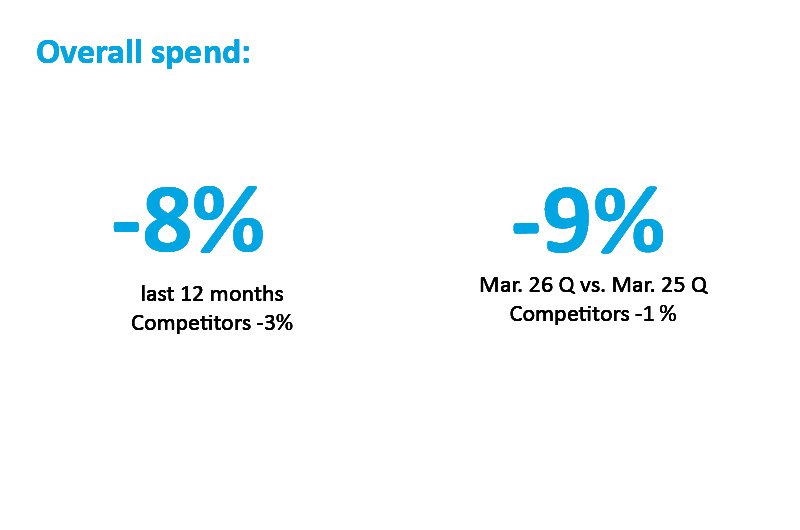
Spend in the March 2026 quarter was cautious nationwide. Ongoing domestic socio-economic pressures and international geopolitical tensions all contributed to these behaviours. As a result of this backdrop, overall spend in the city centre during the March quarter was -9% vs the March 2025 quarter, and -8% for the year-ending March 2026. The wider Auckland region reported overall spend being -1% and -3% over the same respective periods.
Source: Marketview. Not for Reproduction.
There were some offsets. The share of international spend in the city centre increased to 30% in the March quarter, +2% from the previous quarter. Tātaki Auckland Unlimited reported international arrivals for the region in summer 2026 were +5% year-on-year, reflecting continued seasonal recovery. Tourism strength is highly seasonal, with this quarter representing peak demand driven by summer travel patterns. Notably, we had one of our busiest cruise days over the March quarter with ~9,000 passengers disembarking in the city centre on 21 February.
Overall, while increased visitation is helping to support activity, spending remains constrained by the wider economic environment.
Leasing News
Sources: Colliers, Auckland Office and Retail Essentials report for 1H 2026
Retail vacancy rates reached their lowest level since December 2020
The latest reports from Colliers show a mixed picture of leasing trends across the city centre. There were some signs of pressure in the office market alongside improving conditions for retail.
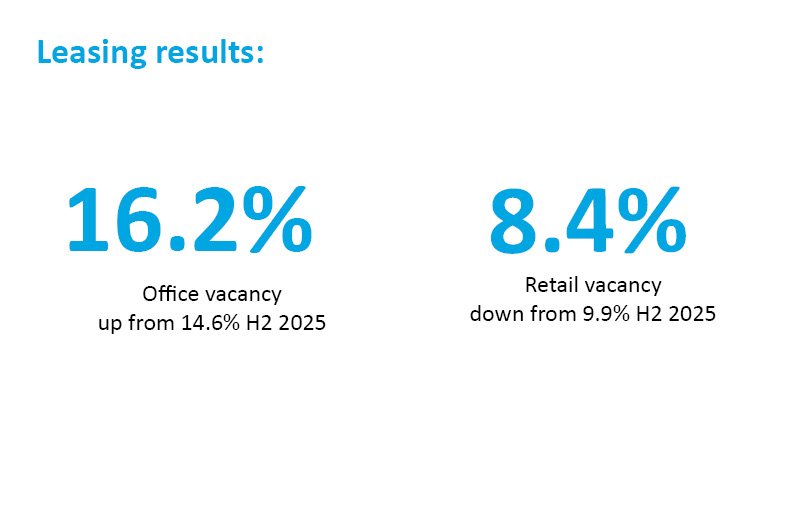
In the office sector, vacancy increased to 16.2% in the first half of 2026, up from 14.6%. This reflects ongoing adjustments in workspace demand. Prime-grade vacancy was 8.5% vs. 8.4% in June 2025. This shift reflected more premium developments being completed, and tenants moving to higher-end spaces.
Retail performance has been more positive. Vacancy rates declined to 8.4%, down from 9.9%, reaching their lowest level since December 2020. Demand has been strongest in key locations such as Lower Queen Street, particularly from luxury and international brands.
Business News
Business investment in the city centre continues, with several notable developments over the quarter. The opening of the 322-room Radisson RED hotel adds further capacity to support growing visitor demand, while the redevelopment of Queens Arcade signals renewed confidence in the retail environment. We’re also excited to welcome Cartier’s flagship New Zealand store at 66 Queen Street. Located in the former Imperial Hotel, this heritage-listed building is currently undergoing an elegant refurbishment.
Spacefor expanded in the first quarter of 2026, growing to three locations in Britomart since launching in 2023. Designed as flexible, short-term retail spaces, Spacefor is drawing 25–40 brands into the city centre each year, introducing new audiences, experiences, and energy into Britomart’s retail ecosystem. Its newest site, the recently opened Grand Pavilion, marks a significant step up, enabling larger brand activations and bringing more scale to the precinct. We spoke with founder Max Mamaev about Spacefor, which you can watch here:
On High Street, iconic menswear brand Crane Brothers expanded the original store and extended the lease for another 25 years, a strong signal of long-term confidence. We spoke to founder Murray Crane about what first drew him to the area and his decision to expand.
While underlying spending remains subdued, the combination of rising foot traffic, improving retail occupancy, and a strong events and infrastructure pipeline positions the city centre positively. The key challenge ahead will be converting increased visitation into sustained, everyday spend.