From Empty to Energised: Activating the City Centre through the Vacant Spaces Initiative
Instead of sitting idle between leases, shopfronts are being reimagined through the Vacant Spaces initiative, bringing fresh energy and interest to the city centre. Led by Heart of the City, with support from Auckland Councill and the City Centre Targeted Rate, it connects property owners and investors with local artists to activate shops between tenancies. Instead of sitting unused, these spaces are transformed with vibrant installations that create visual interest at all hours, helping the city centre feel cared for and continually evolving.
One recent collaboration on High Street shows how this approach works in practice. At 2 – 4 High Street (Hotel De Brett Building), artist Trish Campbell transformed a vacant shopfront into an installation, and it was leased within a few months. The work, created out of colourful neon lights, interrupted the usual rhythm of passers-by. Trish says of the initiative: “Art in a window gives people a reason to slow down,” she says. “It makes the space look loved.”
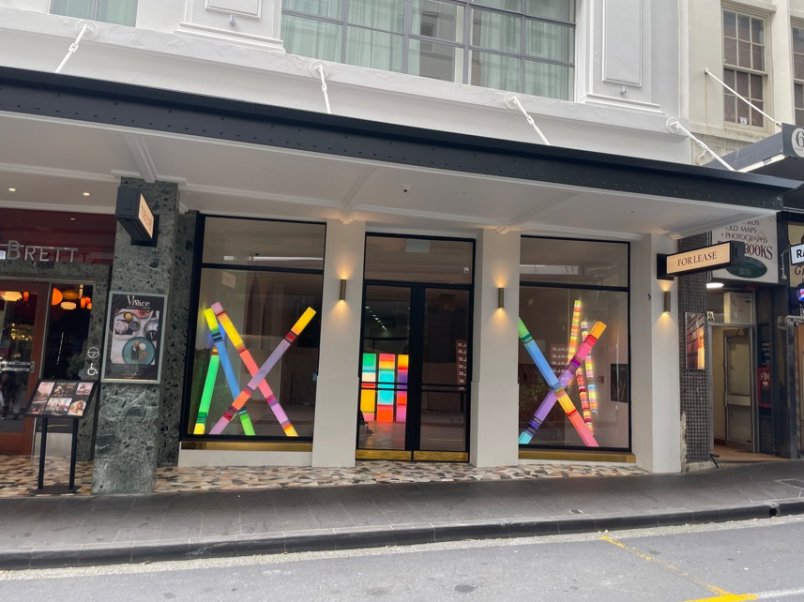
2-4 High Street Street View. Artwork by Trish Campbell. Supplied.
Simple collaboration, quick results
For part property owner and building manager Olly Gunman at Meccano, the appeal of the Vacant Spaces initiative was immediate. Faced with an empty tenancy, activating the space was a practical way to ensure it continued contributing to the street. “It seemed like a sensible thing to do with an empty tenancy. Simple as that.”
The collaboration came together quickly. Heart of the City managed the logistics and connections, leaving each party to focus on their role. “Heart of the City handled the logistics and the artist relationship. We provided the space. It was genuinely straightforward,” says Olly.
For Trish, the simplicity was key. “I had work available that was not being seen, they needed activity. There was no complicated brief to navigate.”
Changing the energy of a space
Once installed, the light from the artwork spilt onto the street around the clock. In Trish’s words: “People stop. That changes the energy of a space quite quickly.”
She continues: “People have been photographing it from the street. I’ve had strangers message me through Instagram after finding the work through the window. That kind of organic response is hard to manufacture.”
The experience also highlights a broader opportunity for artists. “Working in a city-facing retail space gives access to people who would never walk into a gallery,” says Trish. In that environment, the work has to stand on its own. “The work has to earn attention from a general public rather than a curated audience. That’s a different and valuable test.”
Since installing the piece, Trish has seen a noticeable lift in interest. “The visibility this kind of space offers is difficult to achieve any other way.” It also reinforces the role initiatives like this can play in creative careers. “They give artists a foothold outside the traditional gallery system. Not everyone can wait for that door to open.” What started in one space didn’t stay there; since getting involved in the Vacant Spaces Initiative, Trish’s work has been showcased across a variety of city-centre locations.
But the impact doesn’t stop with the artist; it feeds back into the city centre. “It brings people into the city as there is something out of the ‘High St normal’ to discover. When those two connect, anything can happen as it is unmediated,” says Trish.
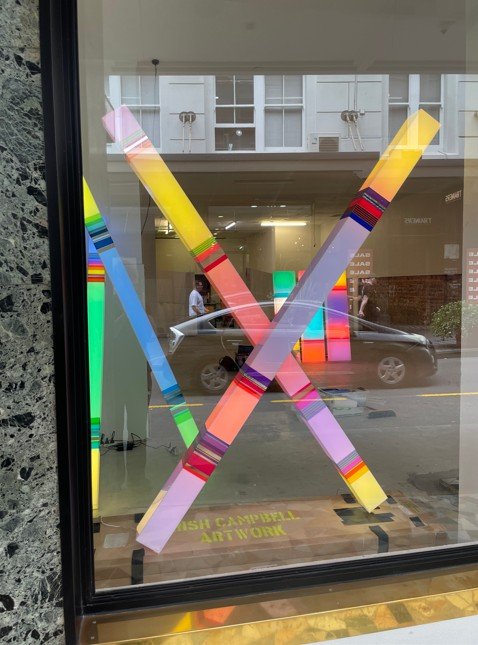
2-4 High Street Detail. Artwork by Trish Campbell. Supplied.
Benefits for property owners
For property owners, there’s clear advantages. A well-presented vacancy signals care and active management, even during transition periods.
"It cost us very little and the space looked much better for it. We leased [2 - 4 High Street] within a few months of the installation going in, so something worked".
Maintaining that standard supports both leasing and the surrounding environment. “It… keeps the presentation up while you work on the right outcome and is a much better outcome for surrounding property owners and your own tenants," says Olly.
Reframing vacancy and supporting a more vibrant city centre
Beyond individual sites, this initiative helps to shift how vacancy is understood. Instead of a gap, it becomes a period with potential. “It reframes it as an interval rather than a failure. Something can be happening even when the permanent tenant hasn’t arrived yet,” says Trish. “It says someone cares about this space.”
Olly shares a complementary view.
“It doesn’t have to look like one. If the space is presented well in the meantime, it can still contribute something positive.”
Together, these perspectives point towards a simple outcome, namely a street that feels vibrant and considered. For Olly, it is easy to define: “A street that looks like people care about it.”
And for those considering getting involved, the message is clear from both sides.
“For artists, don’t wait for perfect conditions,” says Trish.
“The result is far better than an empty window,” adds Olly.
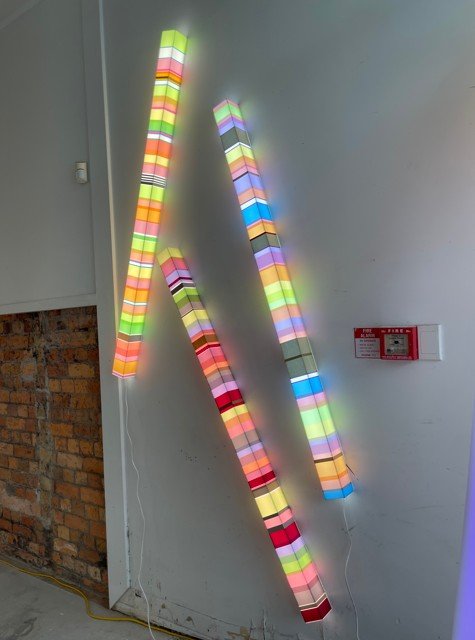
2-4 High Street Detail. Artwork by Trish Campbell. Supplied.